From software testing to embedded development, and now to AI agents
—— always becoming a better engineer, always on the way.
Be a builder, learn in public. 15,000+ likes & saves on my tech content (Xiaohongshu)
Software engineer with nearly 3 years at Scania R&D, building production embedded systems and AI-powered internal developer tools—from delivering production vehicle middleware during the China R&D branch's 0→1 buildout to creating a RAG-based engineering knowledge assistant adopted across the high-performance team.
Recently built 3 AI agent projects end-to-end on my own — one of them, Start From JD, is deployed and publicly live. I bring hands-on experience analyzing and designing complex business systems, shipping end-to-end, and running containerized AI coding agents like Claude Code. I understand the AI agent stack deeply and can build scalable agentic systems.
M.Sc. in Applied Informatics from Xi'an Jiaotong-Liverpool University. I bring a global outlook and thrive in fast-paced, cross-functional teams.
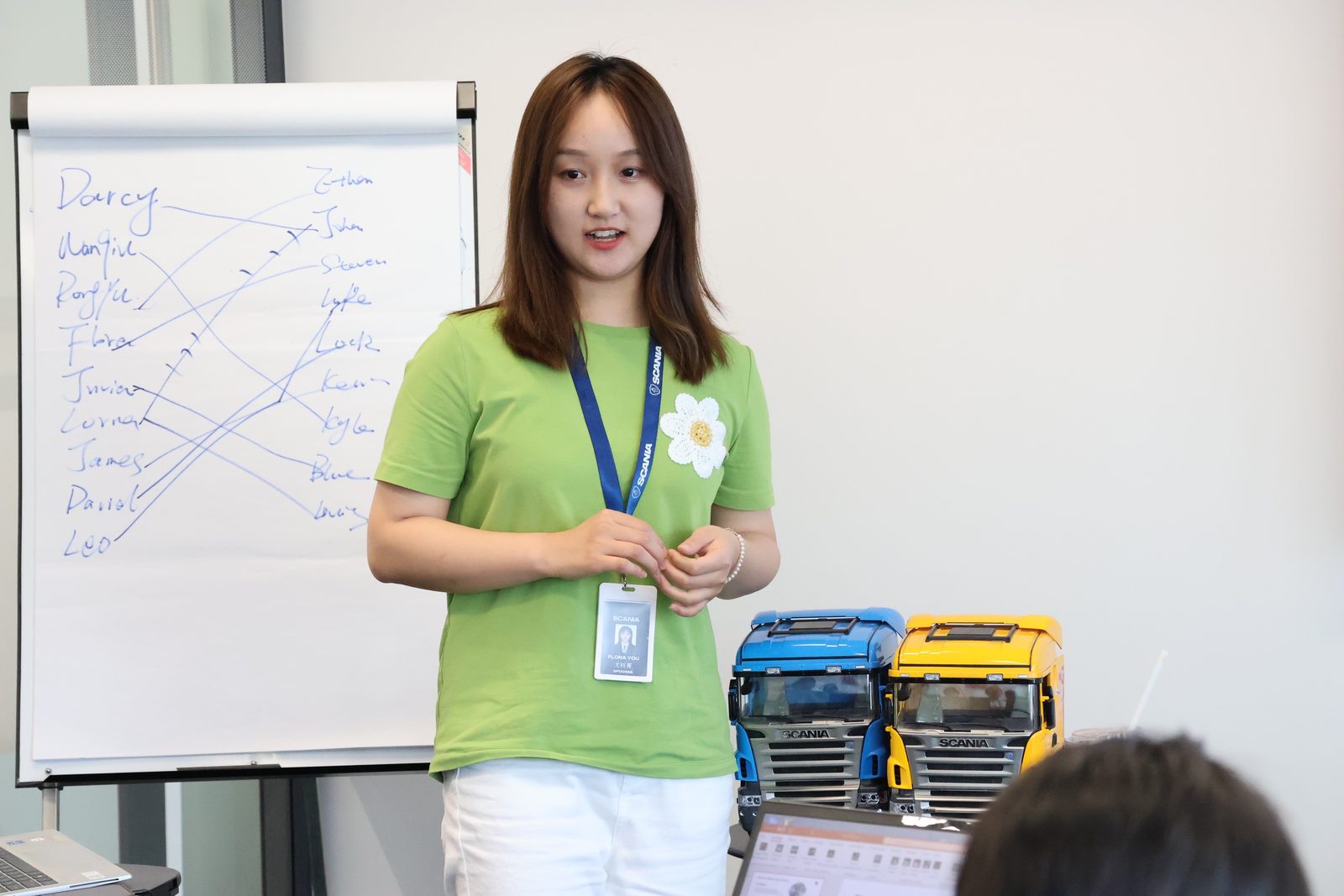
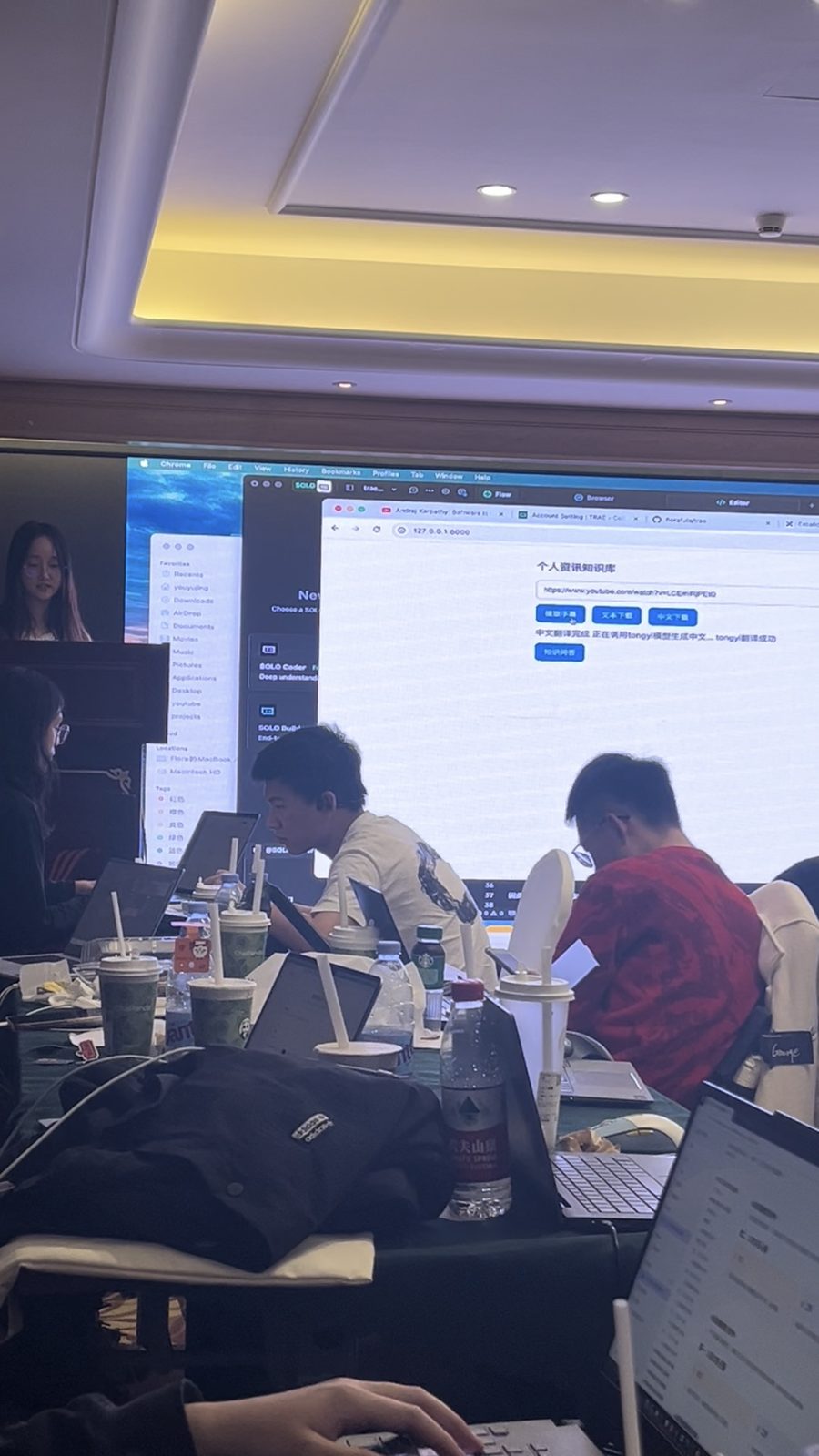
Leading a team session at ScaniaMaster's graduation · XJTLUAt the hackathonHackathon demo pitch
Experience
Work & Education
May 2023 — Dec 2025
Application Software Engineer
Scania R&D (Jiangsu) Co., Ltd. — Shanghai Branch
As one of the early engineers in the China R&D branch's 0→1 buildout, built the instrument-cluster middleware from scratch to relay vehicle data to the Android and GUI layers, delivering the in-house DDU software into production.
Designed and built an AI knowledge-base Q&A assistant for the team, serving 52 core high-value users and accumulating 2,312 professional documents, 1,137 curated QA entries, and 1,250 structured terms—breaking down departmental knowledge silos.
Agent and embedded engineeringComplex-system analysis & designInterface / tool integrationRequirements → reliable pipelinesEnd-to-end deliveryCross-functional work in English
Sep 2021 — Apr 2023
M.Sc. in Applied Informatics
Xi'an Jiaotong-Liverpool University · Sino-foreign joint venture, taught in English
Jul 2019 — Jul 2020
Software Test Engineer
Dreame Technology · joined at startup stage
Joined at the startup stage; designed and executed full-lifecycle test cases (development to launch) for 6 consumer hardware products. Distilled the probing of product boundaries and edge cases into reusable testing methods, now carried over to the exploration and evaluation of LLM / Agent capabilities.
Independently designed and built a Coding Agent Runtime prototype to tackle problems that Coding Agents commonly hit in real software-development scenarios: tool misuse, context overflow, long-task interruption, and over-privileged dangerous commands
Built a single-lead-Agent-driven ReAct execution loop with LangGraph, supporting sub-Agent spawning for complex sub-tasks with isolated contexts and git worktree file isolation
Designed a multi-stage "static prefix + dynamic suffix" context assembly to hit the prompt cache and cut cost; automatic compaction when context approaches the window limit
Applied tiered approval to high-risk actions with inherited permission boundaries (tighten-only) for sub-Agents; handled exceptions including tool failures, context overflow, user interruption, and infinite loops via Step Limit, retry backoff, checkpoint recovery, and event logging
Established offline evaluation and replay covering code retrieval / bug fixing / editing / command execution / multi-turn invocation / sub-Agent delegation / exception recovery, with all metrics auto-aggregated from the event stream
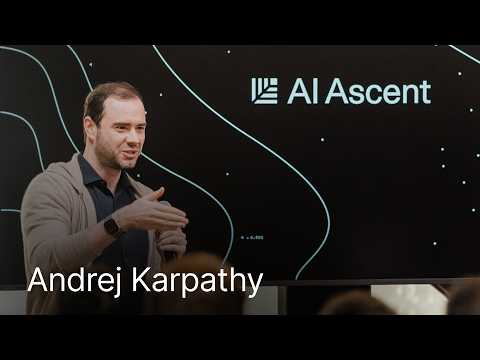
Andrej Karpathy talk · English · YouTube ↗ ~4,300 words; 35 minutes to watch in full
→
From "Falling Behind" to Software 3.0: Andrej Karpathy on Agentic Coding
Summary Since last December, the latest models just write correct code, so he rarely corrects them — and for the first time felt "behind." That leads into "Software 3.0": programming shifts from writing code to writing prompts, with the context window as the lever for steering the LLM…
Software 3.0VerifiabilityJagged intelligencevibe coding vs agentic6 sections · 8 takeaways
≈ 5-min read · a 35-minute talk, distilled into one article
Workflow
Genius Programmer
To make Vibe Coding more efficient, I refined a structured workflow that I now use consistently. The goal is simple: whenever I start a new project, I don't have to figure out what to do next. From defining requirements, building an MVP, and breaking work into manageable slices, to verification, demos, evaluation, and observability, each stage has a dedicated prompt that keeps the process consistent. I'm sharing it here in the hope that it can serve as a useful reference for others.
01Define RequirementClarify›
Nail down exactly what you're building before touching code. Surface ambiguities, set measurable success criteria, and scope MVP vs. nice-to-have.
› PromptYou are a senior AI-native software engineer.
Given this problem: [your problem here]
Help me:
1. Identify ambiguous requirements
2. List clarifying questions
3. Define success criteria (include 1-2 measurable eval metrics I can verify against)
4. Separate MVP vs Nice-to-have
5. Estimate what can realistically be built in a 45-minute interview
If an answer is not available, state explicit assumptions and move on.
Keep answers concise.
02Design WorkflowArchitect›
Design the thinnest end-to-end workflow: components, data flow, APIs, and dependencies — with ASCII diagrams. Goal: a working version in 5–10 minutes.
› PromptDesign the thinnest end-to-end workflow for this problem.
Output:
- components
- data flow
- APIs
- dependencies
Use simple ASCII diagrams.
Optimize for getting a working version running in 5-10 minutes.
03Build MVP SkeletonShip›
Define the single golden-path scenario and produce a minimal runnable skeleton. Smoke-test before you tag — the skeleton must actually boot.
› Prompt — MVP skeletonDefine the golden path (the single main success scenario) and a minimal runnable skeleton.
Requirements:
- describe the MVP scope first (what's in / what's out)
- produce only an end-to-end runnable skeleton — wiring, not feature code
- mock external systems if needed
- no premature abstractions
- no authentication
- no database unless required
- if the solution includes a frontend page, make it runnable in a browser and provide the URL/opening step
Goal: a skeleton that runs end-to-end; real feature code comes per-slice next.
Smoke test before delivery:
- after producing the skeleton, actually RUN it and exercise the golden path ONCE
- show the real stdout / curl response / what you observed — do NOT infer from reading code
- happy path only; just prove the skeleton boots and returns a response end-to-end
- if it doesn't run: minimal fix (max 1-2 iterations), then re-run; if still broken, stop and report
Gate: do NOT proceed to the GIT step until the skeleton has booted and answered the golden path once for real.
› After MVP — Git checkpoint
You are operating in a new local directory with completed MVP code. No git repository exists yet.
Perform git setup only:
1. git init
2. git add .
3. git commit -m "mvp skeleton"
4. create annotated tag v0-mvp with message "MVP skeleton baseline"
Constraints: do not modify source files · no extra commits · no remote push
04Break into SlicesPlan›
Split the MVP into vertical slices — each independently runnable, user-visible, demoable, and implementable in under 10 minutes. Avoid layer-by-layer splits.
› PromptBreak the MVP into vertical slices.
Each slice must:
- be independently runnable
- provide visible user value
- be demoable
- take less than 10 minutes to implement
Avoid splitting by layers (frontend/backend/database).
Prefer end-to-end slices.
05Code a SliceImplement›
Implement exactly one slice at a time. Minimal diff, no refactoring unrelated files, no design discussion — just working code changes.
› Prompt — replace N with the slice numberImplement only Slice N.
Constraints:
- for Slice 1, scaffold minimally; from Slice 2 on, modify existing code only
- do not refactor unrelated files
- keep diff minimal
- return code changes only
- assumptions only if strictly required for implementation (no design discussion)
06Run, Verify & Sign-offVerify›
Actually execute the slice — no guessing from reading code. Print a test-case table, give PASS/FAIL, then produce a demo card for the interviewer.
› Prompt — replace N with the slice numberRun and verify Slice N now — actually execute, do NOT infer from reading code.
Pick the verification that fits this slice and actually DO it:
- backend / CLI / script / API → run the command, show real stdout/stderr or curl response
- web page / UI → actually open the page, walk this slice's flow, observe the result
If it fails: perform minimal fix (max 1–2 iterations). If still failing, stop and report.
Before giving PASS/FAIL, PRINT the test cases you actually ran:
| # | input / action | expected | actual (real output / observed) | pass? |
At least 1 case for the happy path; add an edge case only if cheap.
Then give overall PASS / FAIL.
Gate: a slice isn't "done" without printed test cases backed by a real execution.
Demo card (for presenting to the interviewer):
- what this slice added (one line)
- how to demo it: where to open / what to type (exact input) / what I'll see
Only list what actually passed; if it didn't run, leave it out.
› After slice — Git tag
You have just finished implementing Slice N. (change N to the actual number)
Now perform git tagging only.
Actions allowed:
- create annotated tag v0.N-slice on current HEAD
- message: "Slice N completed"
Constraints: do NOT modify source code · no new commits · no remote push · only git tag command
07Demo HandoffPresent›
Consolidate every passing slice into a single DEMO.md script you can read off live — feature list, boot command, ordered demo route, and a broken-feature flag.
› PromptI'm about to demo this app to the interviewer, but I haven't tracked slice by slice what you built.
Consolidate every slice that is done AND actually passed in step 6 into a single demo script I can read off and click through end to end.
Write the whole script to DEMO.md. It must contain:
1. Feature list: one line per completed slice — what it added + which file holds the code.
2. How to start: one command to boot the server + the URL to open.
3. Demo route (ordered for presentation), each step gives:
- action: which URL / where to type / what to type (quote it exactly) / which button
- what I'll see: what actually appears on screen (one line)
- what to say: one line I can say to the interviewer
4. Flag anything broken: if a slice didn't pass, call it out — don't let me demo a broken feature live.
Only describe features that were actually built and verified; do not put unimplemented work in the demo route.
When done, save/overwrite DEMO.md and tell me its path and how to open it.
08Eval DesignEvaluate›
Design a lightweight evaluation strategy for the AI workflow: 5 test cases, expected behavior, failure modes, and metrics — interview-sized.
› PromptGiven this AI workflow:
[paste architecture]
Design a lightweight evaluation strategy.
Include:
- 5 test cases
- expected behavior
- failure modes
- metrics
Keep it interview-sized.
09ObservabilityMonitor›
Define the production metrics you'd collect — grouped by latency, quality, reliability, and cost.
› PromptWhat production metrics would you collect for this system?
Group by:
- latency
- quality
- reliability
- cost